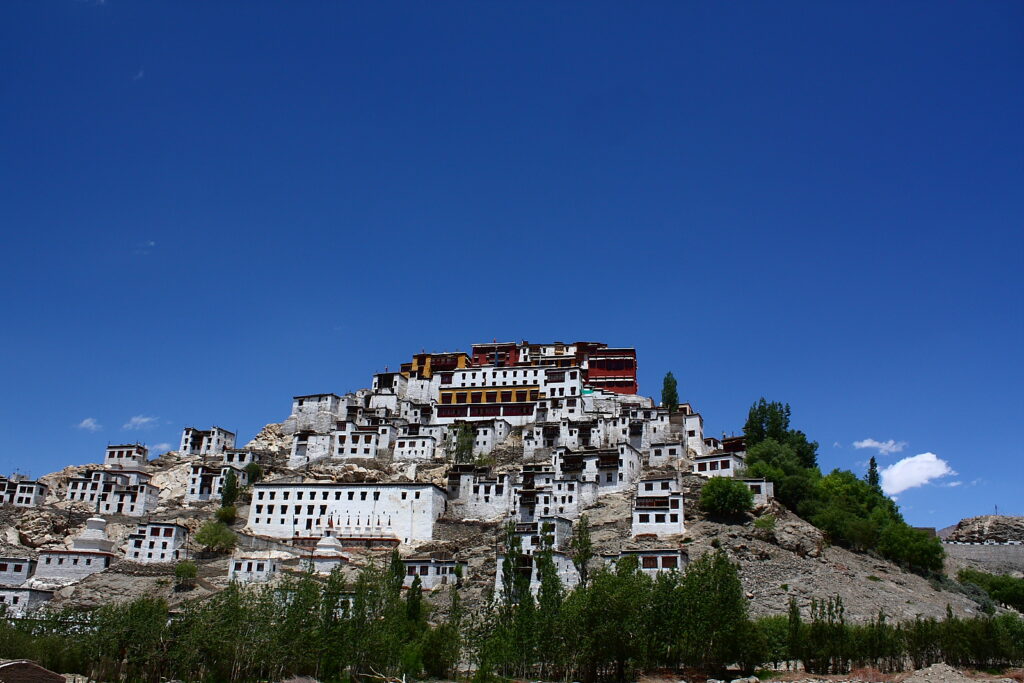
Thiksey Monastery is one of the most prominent and visually striking Buddhist monasteries in Leh, Ladakh. Perched majestically on a hilltop about 19 kilometers east of Leh town, the monastery overlooks the fertile Indus Valley and stands as a shining symbol of Ladakh’s rich spiritual and cultural heritage. Often compared to the Potala Palace of Lhasa for its tiered architecture, Thiksey Monastery is an important center of Tibetan Buddhism in the region. Founded in the 15th century by Sherab Zangpo, a disciple of the great reformer Je Tsongkhapa, Thiksey Monastery belongs to the Gelugpa (Yellow Hat) sect of Tibetan Buddhism. Over the centuries, it has grown into a large monastic complex housing temples, assembly halls, stupas, and residences for monks. Today, it is home to several dozen monks who follow a disciplined monastic life centered on prayer, study, and meditation.
One of the most remarkable features of Thiksey Monastery is the colossal statue of Maitreya Buddha, the future Buddha. Rising to a height of about 15 meters, this statue was built to commemorate the visit of the 14th Dalai Lama in 1970 and symbolizes hope, compassion, and peace. The interior walls of the monastery are adorned with exquisite murals, thangkas, and ancient manuscripts, reflecting the deep artistic traditions of Ladakhi Buddhism. Thiksey Monastery is also renowned for its vibrant festivals, especially the annual Gustor Festival, held in winter. During this festival, monks perform sacred cham dances wearing colorful masks and elaborate costumes. These ritual dances represent the triumph of good over evil and attract devotees, tourists, and photographers from across the world.