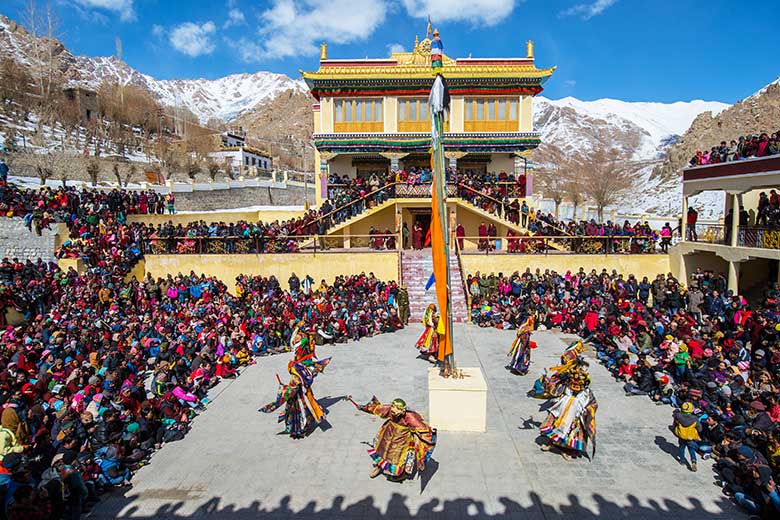
The Dosmochey Festival is one of the most important and spiritually significant Buddhist festivals celebrated in Leh, Ladakh. Rooted deeply in Tibetan Buddhist traditions, Dosmochey symbolizes the victory of good over evil and is observed to ward off negative forces while praying for peace, harmony, and prosperity in the region. Dosmochey is celebrated annually in late winter, usually in February, according to the Tibetan lunar calendar. The festival traces its origin to the teachings of Guru Padmasambhava, who introduced rituals to dispel evil spirits and protect people from natural calamities, diseases, and misfortune. The name Dosmochey literally means “the great scapegoat”, reflecting the ritual of symbolically transferring negative energies away from society.
The main celebrations in Leh take place at Leh Palace and major monasteries such as Thiksey and Diskit. During the festival, monks perform sacred Cham mask dances, wearing vibrant costumes and elaborately designed masks representing protective deities and mythical figures. These dances are not merely performances but spiritual rituals believed to purify the surroundings and cleanse the community of harmful influences. A central highlight of Dosmochey is the construction of intricate thread-cross structures called Dosmo. These structures symbolically trap evil spirits and negative energies. At the end of the festival, they are ceremonially dismantled or discarded, signifying the removal of obstacles and the beginning of renewed spiritual balance.