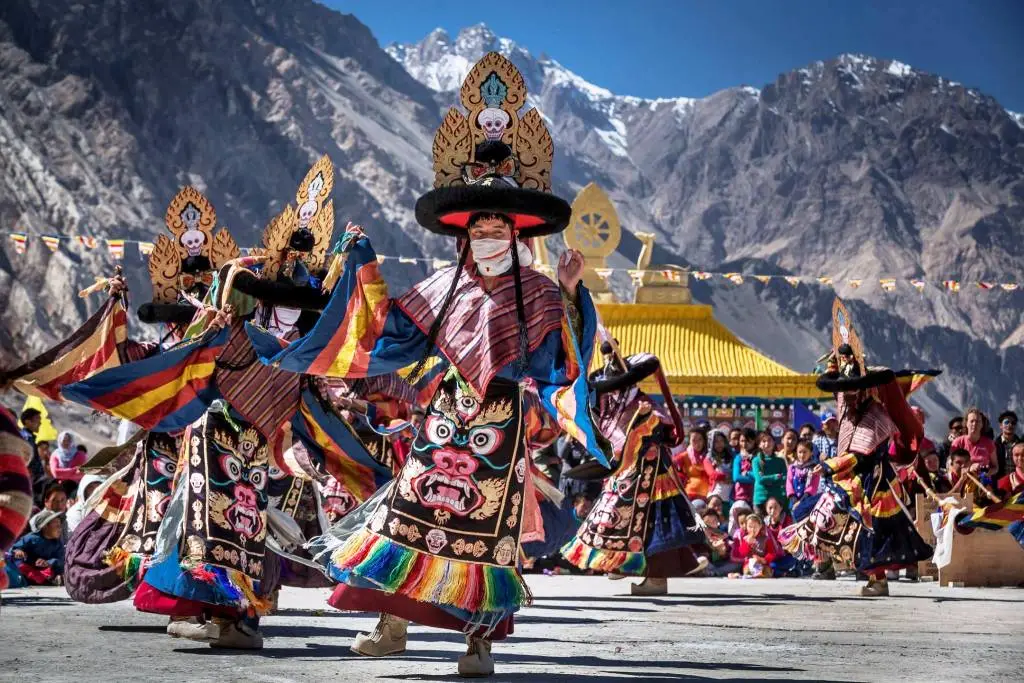
Losar is the traditional New Year festival of Ladakh, celebrated with great joy and spiritual devotion in Leh and across the region. Deeply rooted in Tibetan Buddhist culture, Losar marks the beginning of the lunar calendar and symbolizes renewal, prosperity, and the victory of good over evil. The festival usually falls between late December and February, depending on the lunar cycle, and is among the most significant cultural events in Ladakh. Losar is more than just a New Year celebration; it is a time for spiritual cleansing and reflection. Preparations begin days in advance, with homes thoroughly cleaned to remove negativity and welcome good fortune. Monasteries in and around Leh become centers of activity, hosting special prayers, rituals, and mask dances (Cham) performed by monks. These sacred dances represent the triumph of wisdom over ignorance and are believed to protect the community from evil forces.
During Losar, families come together to prepare traditional Ladakhi dishes such as thukpa, khapse (deep-fried cookies), and butter tea. Homes are decorated with colorful prayer flags, and offerings are made to household shrines. On the main day, people wear traditional attire, visit monasteries, exchange greetings, and seek blessings for a prosperous year ahead. A distinctive feature of Losar in Leh is the strong community spirit. Villagers and townspeople gather for cultural programs, folk music, and dances, reinforcing social bonds and preserving age-old traditions. Elders pass down stories, customs, and values to the younger generation, ensuring cultural continuity.